
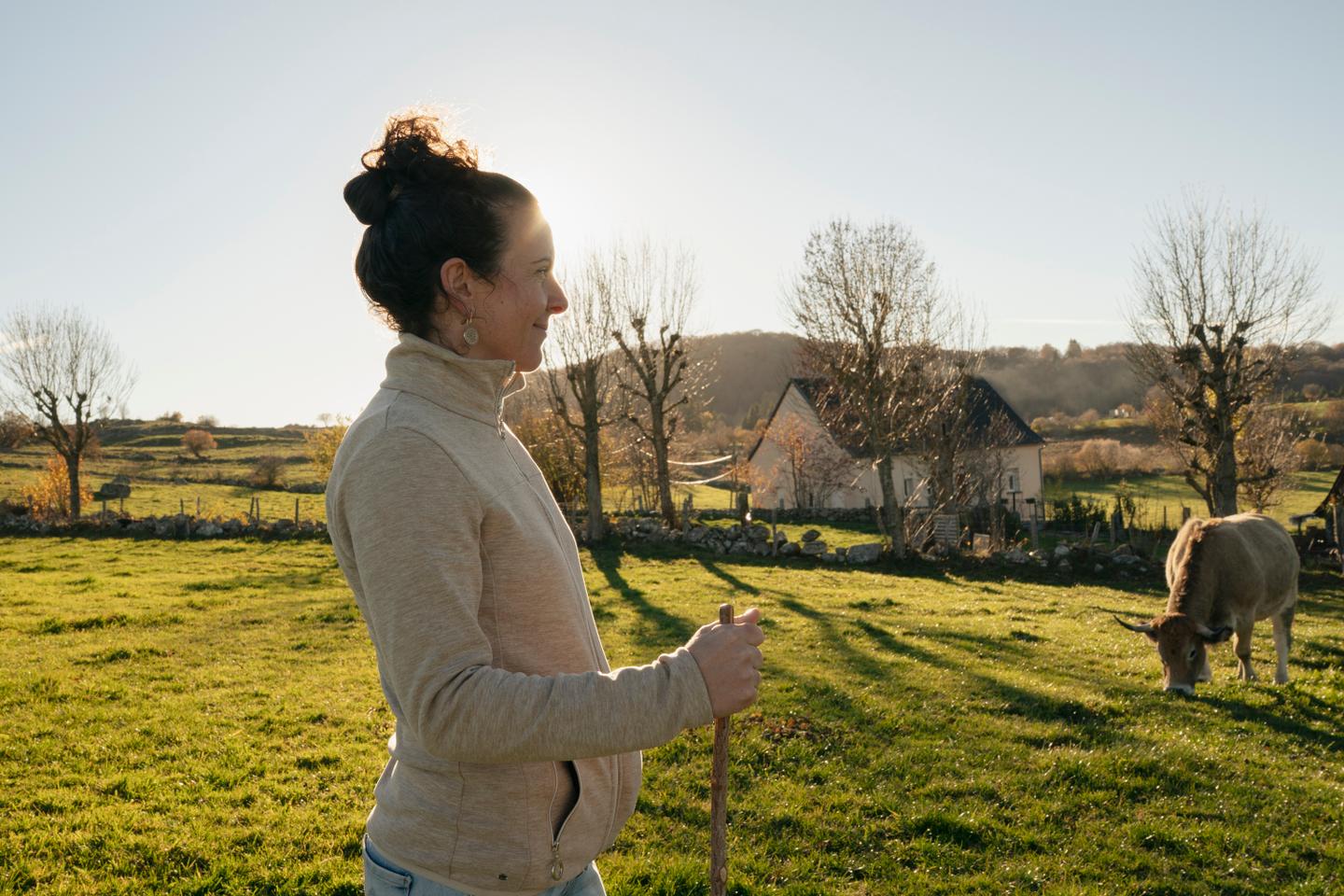
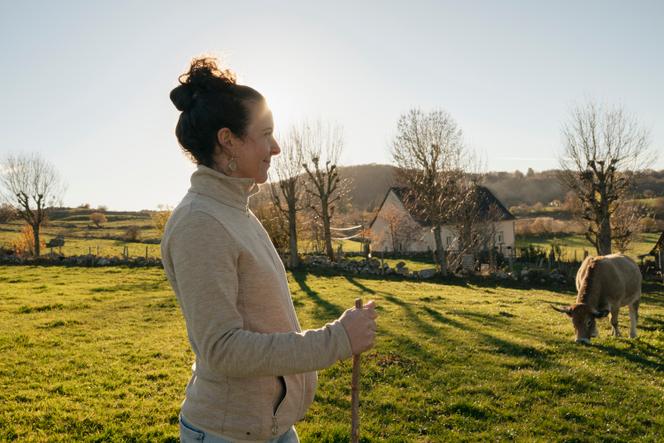
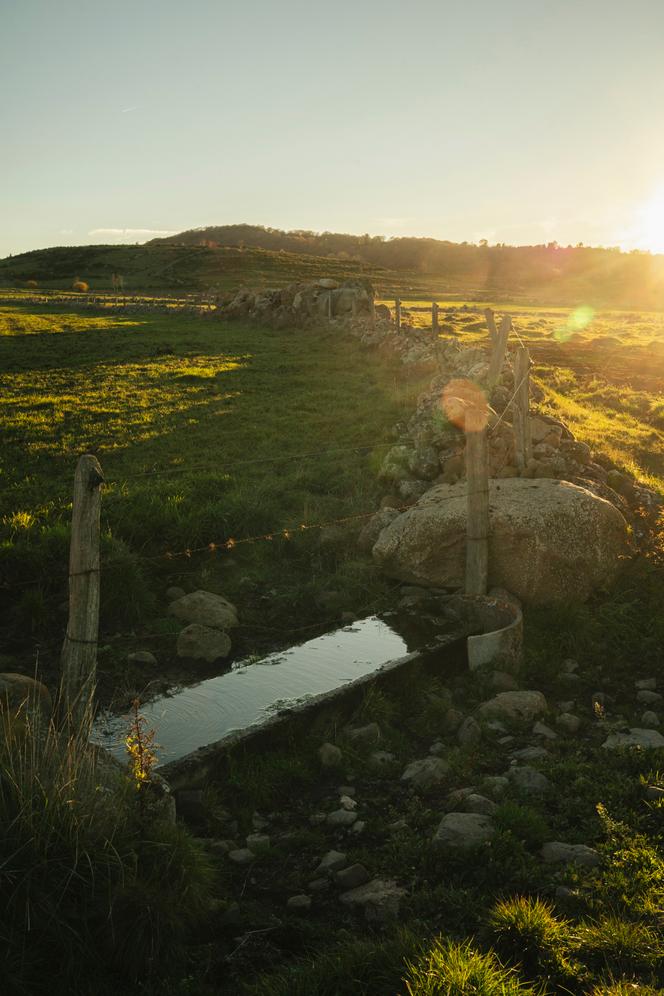
Somewhere on the Aubrac plateau, straddling Aveyron, Cantal and Lozère. Maïté Tichet, 36, lives in total harmony with this end of the world perched at an altitude of 1,250 meters. Before anyone has the idea of congratulating her or, worse, pitying her, she is quick to say that she is living the life she has always dreamed of. Daughter of a breeder, Maïté Tichet grew up with her sisters among cows, on these highlands where sky and earth meet. Having retired for a year, his father, Jean-Louis, has just given him his plots.
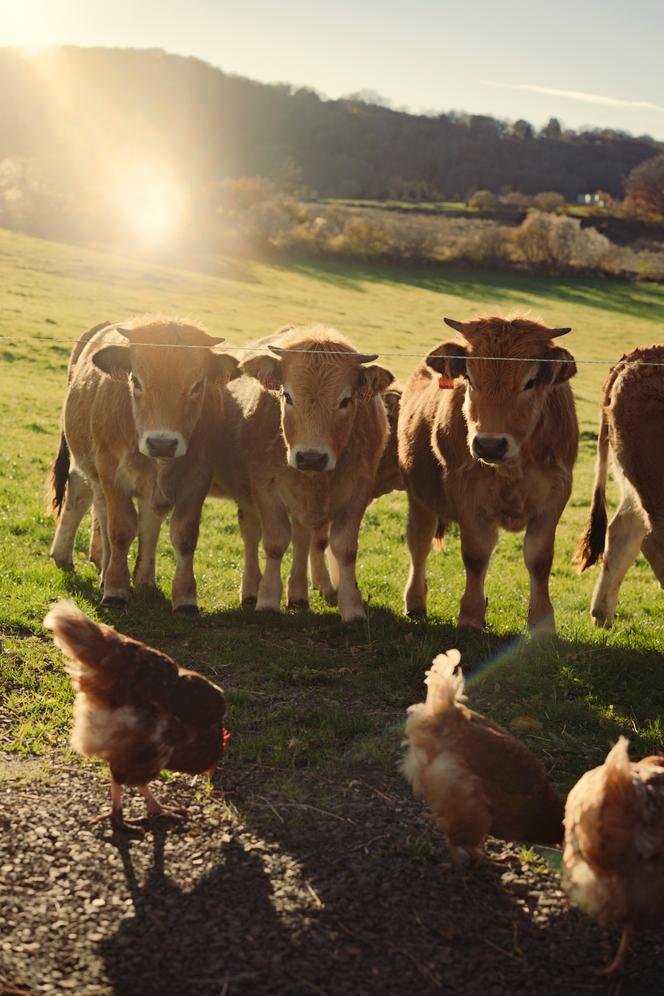
Today, with her partner, Florian, Maïté Tichet raises 110 Aubrac cows on around a hundred hectares of natural meadow. “This rustic breed, recognizable by its wheat-colored coat and its lyre-shaped horns, is perfectly adapted to the demanding conditions of the plateau”she explains. In winter, the breeder devotes herself to her animals, which she shelters from bad weather. But when spring returns, a completely different story begins.
On the austere soils of Aubrac, the narcissus (Narcissus poeticus) grows in the wild, spreading a white carpet as far as the eye can see. This endemic flower is harvested by seasonal workers from the end of May to mid-June. “This activity has always been a complementary crop for breeders on the plateau”she says. The narcissus has no agricultural added value – the cows do not consume it – but it is used to create the greatest perfumes in the world (Matière noire by Louis Vuitton, L’heure fougueuse by Cartier, Eau de narcisse bleu by Hermès) and symbolizes a unique culture in France.
“In the past, it paid my father the rent for the plot. From now on, it’s his pocket money”she adds with a smile. Flowering is more modest and yields of 5 kilos per hectare are no longer enough to guarantee an income. In parallel with her agricultural activity, the breeder undertook to save a ruined buron, a stone refuge which belonged to her ancestors. “This rustic building was formerly used for the manufacturing and maturing of cheeses, when the breeders brought their herds to the summer pastures, between May and September”.
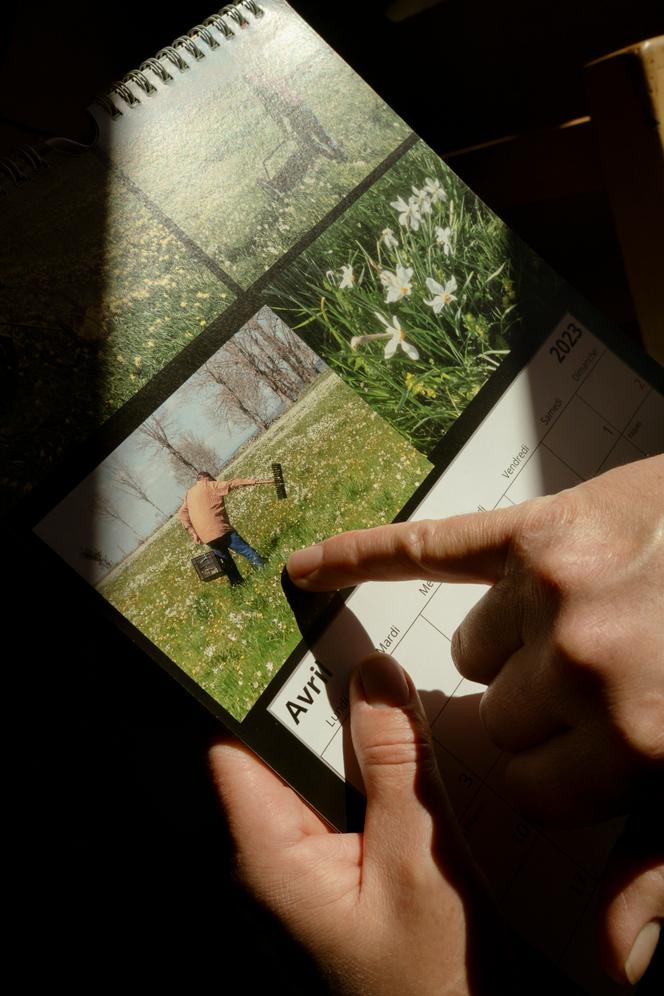
Maïté Tichet has completely renovated it and transformed it into a sort of family inn which includes a restaurant and two guest rooms. Opened in 2015, the Cap Combattut buron welcomes a few hikers and tourists all year round in search of authenticity and breathtaking panoramas.
In the vaulted room of the small restaurant, open only from Easter to All Saints’ Day, the owner offers cuisine inspired by local products and family recipes: piece of Aubrac meat, aligot, rétortillat (truffade made from potatoes and fresh tome) and some homemade terrines. A gourmet way “to welcome the public to tell (their) life and share the challenges of (their) occupation “.
The site of the Cap Combattut buron